
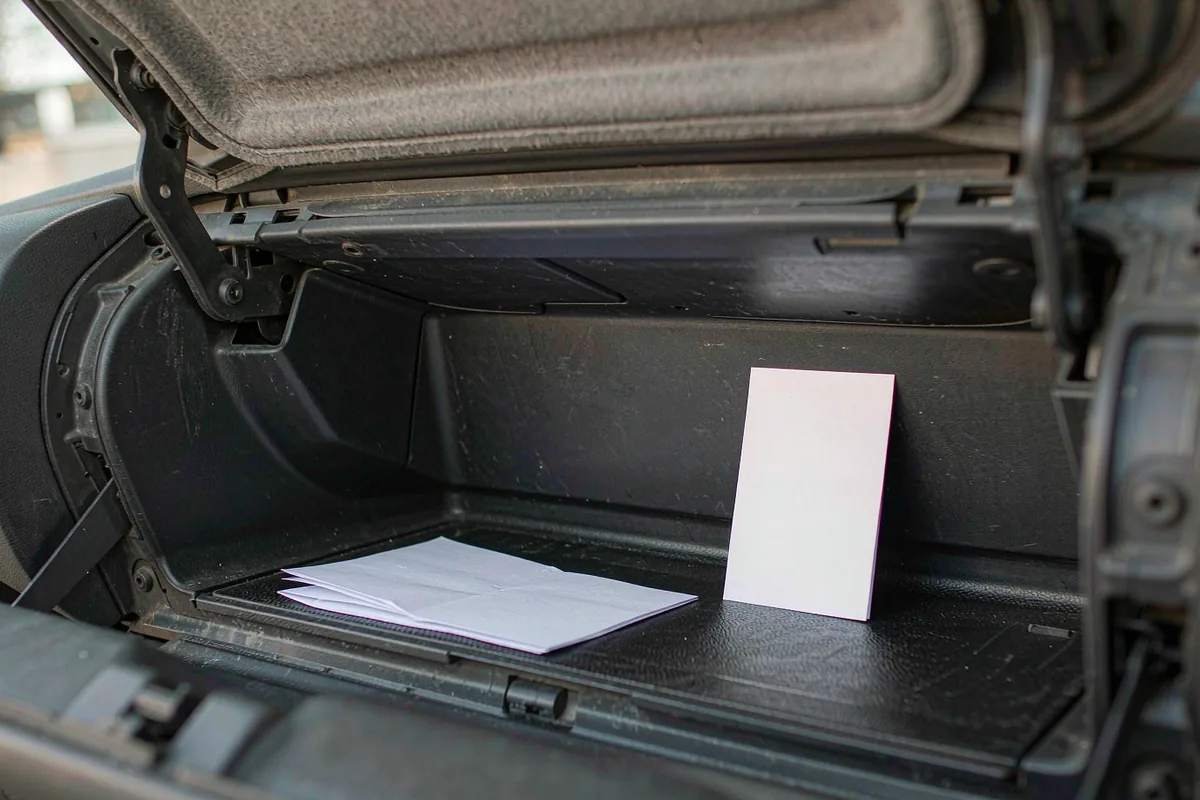
The glove compartment is the worst place to discover that a card expired last month. Proof of insurance sounds like a simple object until you need it: at a traffic stop, at a registration counter, after a crash, or when a lender asks for a document with its own formatting requirements. Each of those moments has a slightly different answer, and a little preparation covers all of them.
The card, the app and the PDF
Most carriers issue a small identification card showing the named insured, the policy number, the vehicle, and the effective and expiration dates. A paper copy in the car is still the most dependable option, because it works with a dead phone, in a garage with no signal, and in the hands of someone who does not want to wait for a screen to load. A digital version stored in a carrier's app is accepted in most states, but acceptance is a state rule rather than a universal one.
A PDF from an email is useful as a backup, especially the full declarations page or a formal certificate, but it is a poor substitute at the roadside if it takes four taps and a password to find. Keep one offline file and one printed card. Neither costs anything, and together they remove nearly all of the friction in this situation.
What an officer can usually verify
In many states, an officer can check electronic records directly, so a card is partly a convenience. That does not make it optional. The card is what confirms the policy number, the dates, and the vehicle you are driving, and it gives you something to hand over without unlocking a phone. If the database is slow or the record has not updated after a recent change, the paper version is often what keeps the stop short.
Check the dates once a renewal arrives and replace the old card immediately. Two cards in the glove compartment, one current and one expired, is a surprisingly common way to create doubt about whether coverage is active at all.
When a digital copy is not enough
A registration office, a lienholder, or a leasing company may ask for something more substantial than the small card, such as a declarations page or a certificate naming them as an interested party. That document has to come from the carrier, and it usually takes a day to arrive. If a move, a new car, or a refinance is coming, request it before the appointment rather than from the parking lot.
After an accident, what the other driver needs is the policy number, the carrier's name, and a contact number for claims. A photo of their card and a photo of yours is enough to get the file started. You do not need to exchange full policy documents at the roadside, and you should not share a photograph of anyone's license more widely than the claim itself.
The small mismatch that causes trouble
Proof is only as good as the details on it. A vehicle identification number with one wrong digit, a name spelled differently from the registration, or an address that still belongs to a previous home can all produce a rejection at a counter or a delay on a claim. Read the card against the registration once a year, ideally when the renewal packet arrives.
Finally, remember that an application, a quote, or a payment confirmation is not proof of an active policy. If you have just switched carriers, wait for the actual card and the declarations page before cancelling the old one. The gap between "I bought it" and "it is in force" is exactly where an expensive misunderstanding lives.