
A branch comes down in a thunderstorm, a windshield cracks on the highway, or a catalytic converter disappears overnight from a parked car. None of those involves a crash with another vehicle, and all three are the kind of Tuesday that makes a driver open the policy booklet for the first time. The useful part of that booklet is shorter than it looks.
The events that usually qualify
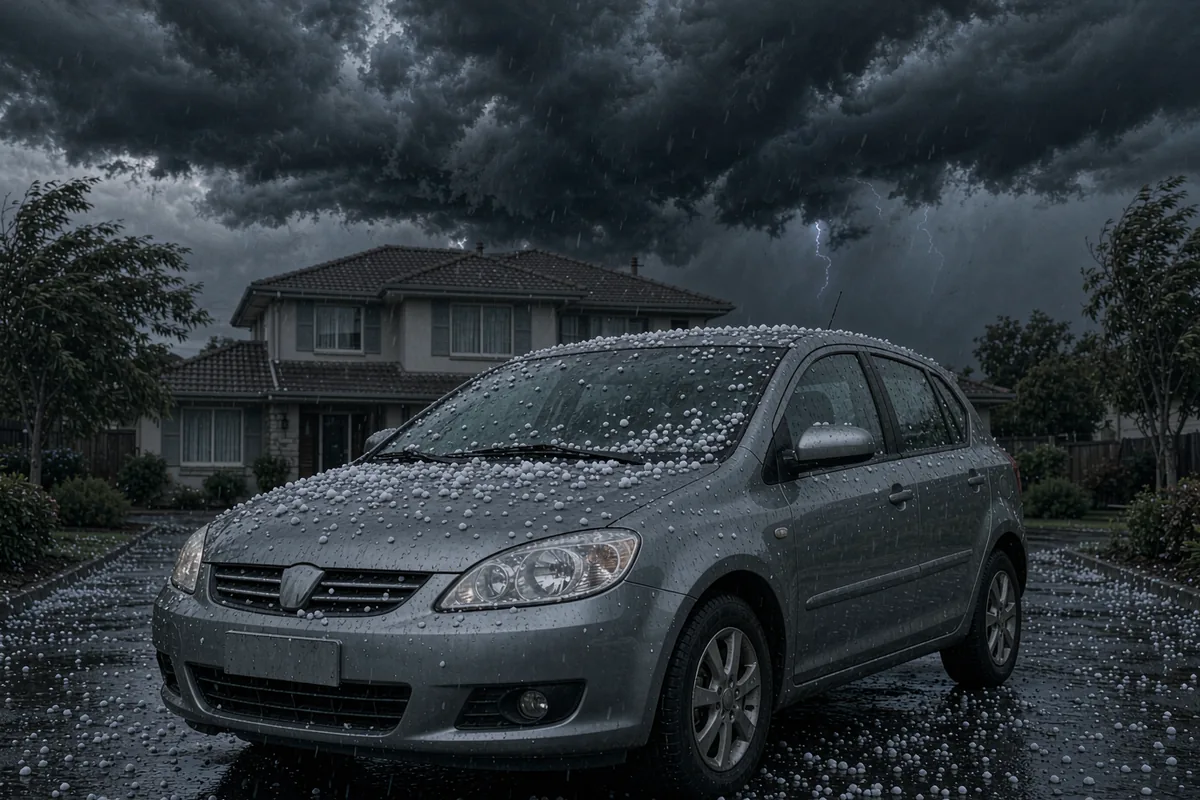
Non-collision damage to your own vehicle is the core of this coverage. Think theft, vandalism, fire, hail, flood, falling objects, glass breakage, and contact with an animal. The common thread is that something other than a collision with another car caused the loss. A deer stepping into a rural road at dusk and a hailstorm denting a hood are handled here, not under the collision portion.
The deductible applies to each separate event, not once per year. If a windshield claim in April and a hail claim in June both land on the same policy, two deductibles are usually involved. Some policies carry a different, lower deductible for glass, so check that line before assuming a cracked windshield will cost the full amount.
What it does not pay for
Wear and tear, mechanical failure, and damage from a crash with another vehicle are outside this coverage. A failed transmission, a rusted rocker panel, and a dent from backing into a pole belong to maintenance or collision. Nor does it cover personal belongings stolen from inside the car; a laptop or a camera generally falls under a renters or homeowners policy instead.
Flood coverage deserves a specific question. Comprehensive policies typically handle water damage to the vehicle, but a car parked in a repeating flood zone may be subject to underwriting rules or exclusions you have not seen. Ask about the garaging address rather than assuming every water event is treated alike, especially if the car sits outside overnight.
A practical way to check your own policy
Find the declarations page and look for two lines: comprehensive and its deductible, and any separate glass provision. Then call and ask three questions: is glass handled at a different deductible, is there a payout limit on custom parts or equipment, and does a rental car get covered while the vehicle is in the shop. Write the answers on the same page you keep in the glove box.
- Locate the comprehensive deductible on the declarations page.
- Ask whether glass claims use a separate, lower deductible.
- Confirm any cap on custom parts or aftermarket equipment.
- Ask whether towing and a rental are included while repairs run.
When keeping it makes sense
On a financed car the lender will almost certainly require it, and dropping it is not an option. On an older paid-off vehicle, compare the annual cost plus the deductible against what the car is worth. If the car would fetch roughly $3,500 and the coverage costs several hundred dollars a year with a $1,000 deductible, the arithmetic starts to argue against keeping it.
Before removing anything, run a one-year thought experiment: could the household absorb a sudden $4,000 loss without borrowing? If the answer is no, keeping the coverage is cheap insurance against a bad month. If the answer is yes and the vehicle is nearly at the end of its life, trimming it is a defensible choice.
One last habit pays off. Photograph the car after any storm, keep repair receipts, and report a loss promptly. An adjuster works from evidence, and a clear photograph taken the same evening is far easier to evaluate than a description reconstructed two weeks later.